
Medical Devices
Description
In this task force, high-level experts in this field discuss the latest developments in the regulatory framework for medical devices. They exchange key insights and interpretations of the EU medical devices framework and identify areas where the BioMed Alliance can provide input and expertise to enhance the safety of medical devices in Europe. They also explore opportunities for reaching out to key stakeholders and organisations in the medical devices field, both within Europe and beyond.
Chair
This task force is chaired by Prof. Alan Fraser and Prof. Per Kjærsgaard-Andersen.
Board Representative
The Board Representative for the Committee is Prof. Sanja Kolaček.
Highlights
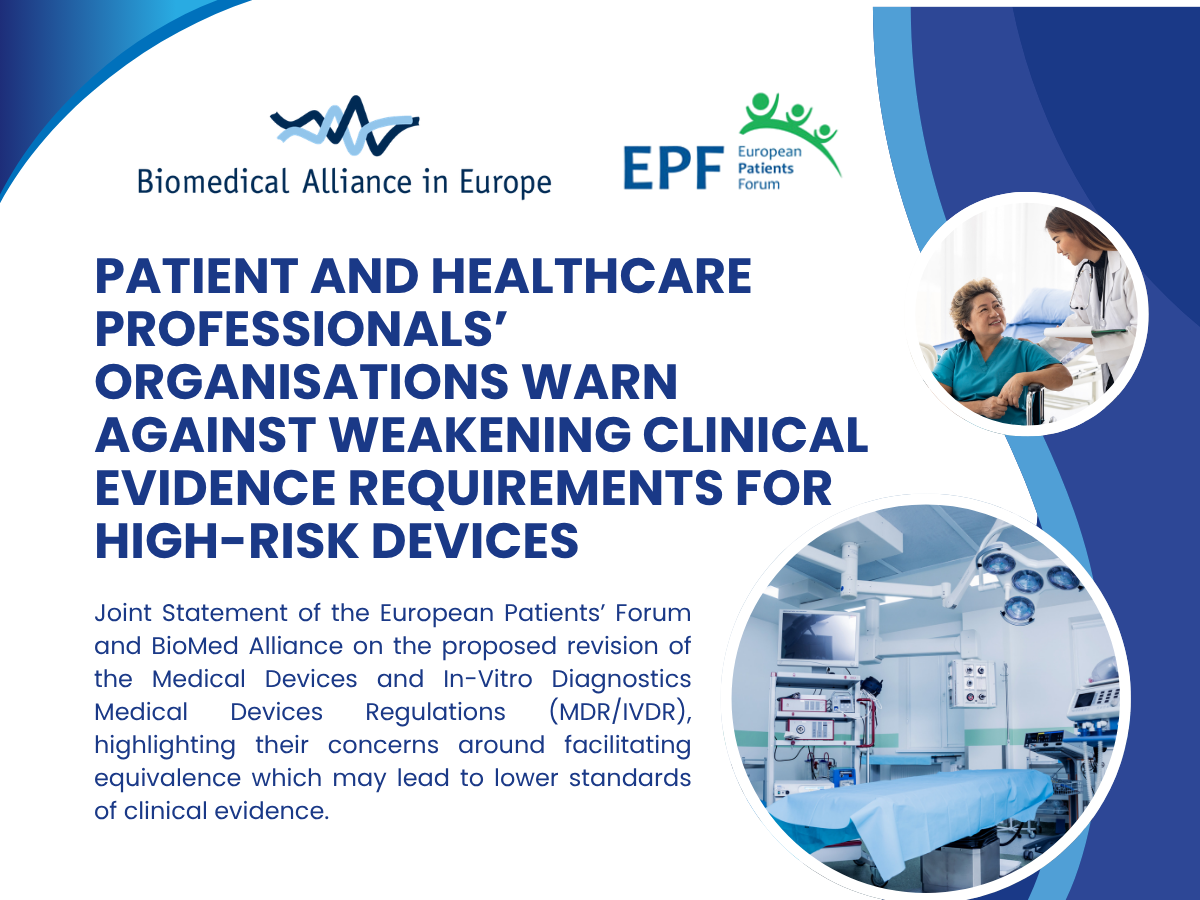
Patient and healthcare professionals’ organisations warn against weakening clinical evidence requirements for high-risk devices
As negotiations on the revision of the Medical Devices Regulation (MDR) and In Vitro Diagnostic Medical Devices Regulation (IVDR) continue in the Council and European Parliament, BioMed Alliance and the European Patients’ Forum (EPF) have published a joint statement outlining their concerns about proposed changes to the rules on equivalence under Article 61 and Annex XIV of the MDR, which could weaken clinical evidence requirements for high-risk medical devices and put patient safety at risk.
The Commission’s proposal would facilitate the use of the equivalence pathway, including by removing the requirement for a contract ensuring full access to the equivalent device’s technical documentation. The Alliance and EPF are concerned that devices may enter the market based on insufficient evidence, and also refer to past examples of devices that were approved on the basis of equivalence and where serious safety incidents emerged. BioMed Alliance and EPF therefore call on the EU institutions to:- Revert to the original wording of Article 61(5) and Annex XIV paragraph 3 of the MDR, preserving the existing safeguards, including the requirement for a contract between manufacturers ensuring full access to the relevant technical documentation when equivalence is claimed for implantable or Class III devices
- Maintain strict criteria for demonstrating equivalence, requiring devices to have the same technical, biological and clinical characteristics, rather than allowing reliance on devices with merely similar characteristics
- Preserve robust pre-market clinical evidence requirements for high-risk devices, particularly Class III and Class IIb implantable devices given the potentially serious and long-lasting consequences of safety failures
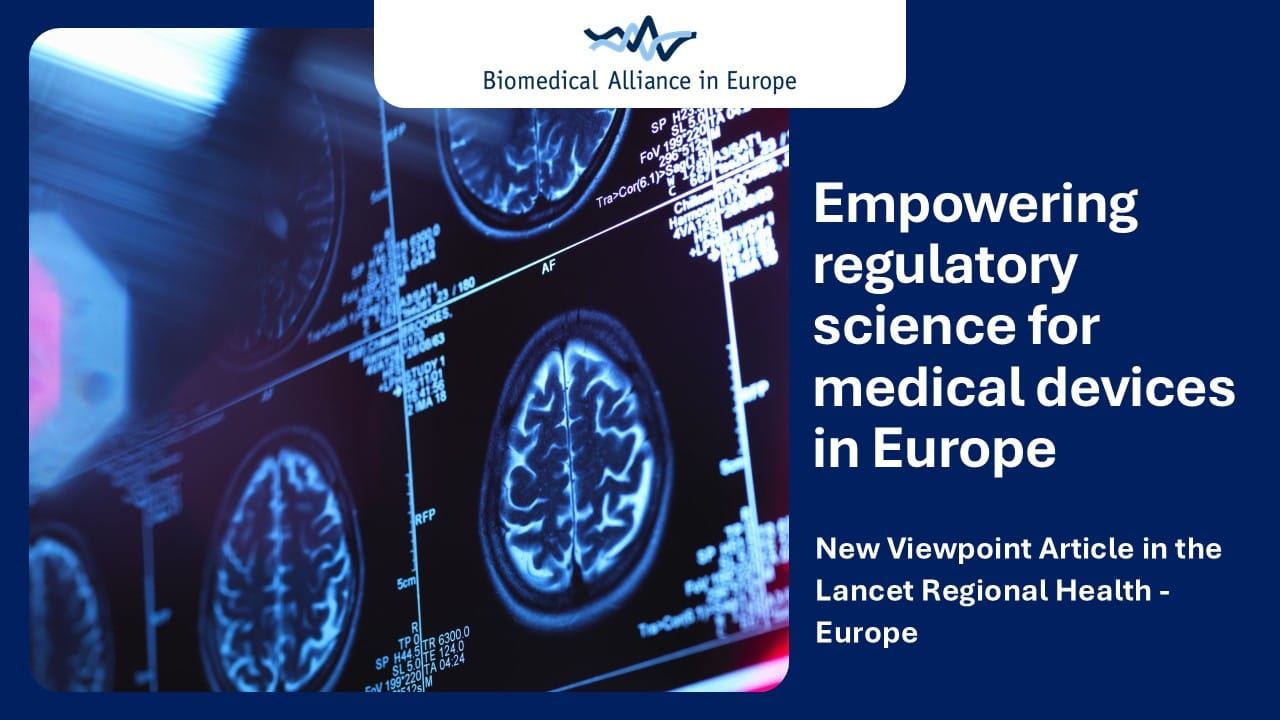
Biomedical Alliance in Europe Calls for regulatory science-driven overhaul of EU Medical Device and Diagnostic Regulations
- Centralise and resource scientific expertise: The EU must substantially invest in boosting medical and scientific capacity within a central coordinating unit. The mandate of the European Medicines Agency (EMA) should be expanded to assume a stronger coordinating function among national authorities for multi-national clinical investigations and post-market surveillance.
- Prevent the 'equivalence' loophole for high-risk technologies: High-risk implantable devices should not be approved solely on claims of equivalence to existing devices. This resulted in multiple cases of avoidable patient harm in the past, and these difficult lessons should not be unlearned. High-risk implantable devices require rigorous clinical investigations, to demonstrate both safety and efficacy.
- Protect diagnostic innovation and precision medicine: The current In Vitro Diagnostic Regulation (IVDR) heavily restricts laboratory-developed tests (In-House IVDs), which account for over 50% of available IVD tests and are critical for precision medicine and orphan indications. The EU must relax restrictions on sharing In-House IVDs between healthcare institutions and abolish IVDR Article 5.5 d, which currently stifles academic innovation in favour of manufacturers.
- Support the establishment of regulatory science as a medical subspecialty: Clinicians, statisticians, epidemiologists, and engineers must actively collaborate with regulators to develop shared standards, and 'regulatory science' must be cultivated as a dedicated subspecialty within every medical field.
Healthcare professionals share views as negotiations on MDR & IVDR Revision continue

Join Us for a Workshop on the Future Directions for EU Medical Devices & IVD Regulations!

New statement advocates for a balanced approach to phasing out PFAS

New statement raises awareness on urgent deadline to avoid medical devices from disappearing
